Posts

Friday- learning about love from the Japanese

Image
In traditional Japanese dress, a kimono is worn by wrapping it around the body and tying a sash, or obi, around the waist to secure the clothing. (https://en.wikipedia.org/wiki/Kimono) The writer Joni Eareckson Tada is married to a Japanese man, and explains how this traditional Japanese image helped her to make sense of Paul's words in Colossians 3: 14: And over all these virtues put on love, which binds them all together in perfect unity. How beautiful, that by learning about a different culture we see something that helps us understand God's purpose for our lives! Surely this underlines the idea we first met in Genesis, that we are all made in God's image and each culture hides within it things that point to that image- even something as simple as a sash to hold your clothes together. If the obi is fixed properly- not with great strength or lots of pinning and gluing, but just fixed in place the way it should be, then the whole kimono can be worn gracefully. Th...

Testing Times

Bear with one another and, if anyone has a complaint against another, forgive each other;  just as the LORD has forgiven you, so you also must forgive. Colossians 3: 13 It seemed that Aristotle's virtues were strong, manly things designed to equip those whose life was lived in public service on the battlefield or running affairs of state. Did the Christian virtues sound a bit...well, pathetic next to them? The virtues of compassion, kindness, humility, meekness and patience don't sound quite so exciting. But in the very next verse, here in verse 13, we are reminded that these virtues are in fact just as difficult to aspire to, and if mastered may give us a more real strength. The reason they are so difficult is other people. It would be easy to be kind to kittens, patient while waiting for the kettle to boil and humble when reading biographies of Mother Theresa. It is far more difficult to show humility, patience and kindness to those who share our bathroom and leave towels...

These would be good clothes to choose for today

As God's chosen ones, holy and beloved, clothe yourselves with compassion, kindness, humility, meekness and patience. Colossians 3:12 Ancient writers such as Aristotle thought carefully about the virtues they would hope to see in a man of good character (and it was only the men they were interested in, of course!). Aristotle proposed four cardinal virtues, which he said were the most important aspects of character to practise in order to become a complete, flourishing human being. His cardinal virtues were: courage justice prudence temperance These virtues sound a bit like the clothes a soldier or statesman would choose, as he faced the tasks that lay ahead of him that day. That's not surprising, as that was the context in which Aristotle lived and wrote. But his list is very different from Paul's. Paul's world was not very different- he was writing to a Hellenized, urban audience which may well have included both soldiers and statesmen. Why did he suggest s...

New Clothes!

Image
Today the sun is shining, and in the Northern Hemisphere it's a sign that Spring is here, and Summer cannot be far behind. At last we can put away our thick Winter coats, fold up jumpers and warm woolly clothes, and with a smile search for the brighter colours and softer fabrics of Spring. The stores would like us to think that we have to shop for a whole new wardrobe- but sometimes it's enough to find clothes that we already have, that we used to wear, but haven't worn for a while. I wonder if the virtues we have been considering can be a bit like this? We know that we should be behaving with kindness, honesty, patience etc.....but have we forgotten about these things, pushed them to the back of our wardrobe and replaced them with the behaviours of darker and colder times? Paul uses this image in Colossians 3, where he writes Don’t lie to one another. You’re done with that old life. It’s like a filthy set of ill-fitting clothes you’ve stripped off and put in the...

Mary- learning character from her heavenly Father

Image
Mary's song in Luke chapter 1 v. 46-55 is well known. My soul magnifies the LORD and my spirit rejoices in God my Saviour The entire song looks away from Mary herself, towards God. She praises Him for who He is, highlighting His character. He has looked with favour on the lowliness of His servant... holy is His name His mercy.....His strength.... He has brought down the powerful from their thrones, and has lifted up the lowly. He helps....He remembers His promises Taking truth and turning it into a song can be very powerful. As Mary sang, was she reminding herself about the God who she worshipped, the God who had just visited her in the form of an angel to give her a most remarkable job to do? Was her song a way of repeating to herself, and all who heard her, just what this God was like? Mary sang of how the ways of God are so often opposite to the ways of the world- and she must have been thinking that she herself was such an unlikely choice to be the mother of Go...

Friday's diversion- Character and personality traits

Brian Little is a Cambridge research professor, who is interested in the psychology of personality. He explains some of his ideas in a fascinating TED talk- find it here  Who are you, really? He has also written a book about his research, "Me Myself and Us: The Science of Personality and the Art of Well-being" where he uses the phrase "acting out of character". He explains that the phrase can mean two different things- we usually use it to describe someone who is acting differently from what we might expect. In this sense, we use character to mean their personality- if a grumpy person acts in kind and thoughtful way, we might describe this as uncharacteristic behaviour. Or if someone who normally is patient snaps and loses their temper, we assume that something unusual has happened because this is not their real character, and maybe the circumstances or provocation was extreme to cause them to behave 'out of character'. But Little suggests that another w...

Westminster attack- two characters under the spotlight

Image
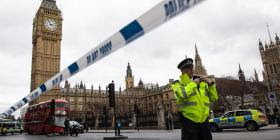
Yesterday PC Keith Palmer lost his life when a terrorist attacked him with a knife after driving a van right into people on Westminster Bridge and attempting to attack the Houses of Parliament in the centre of London. Many people were killed and injured, and the attack has shaken British people. The Prime Minister, Theresa May, said this, "The terrorists chose to strike at the heart of our capital city where all nations, religions and cultures come together to celebrate the values of liberty, democracy and freedom of speech." At the centre of the tragedy are two men whose actions highlight extremes of character. At one extreme is the police officer who lost his life. In the moment of crisis, he displayed courage- courage so strong that it cost him his life. Was this a value worth dying for? Yes, surely it was- many people have taken to social media to praise and thank him for his remarkable character. We recognise in his actions a person who, when it counted, showed us ...